
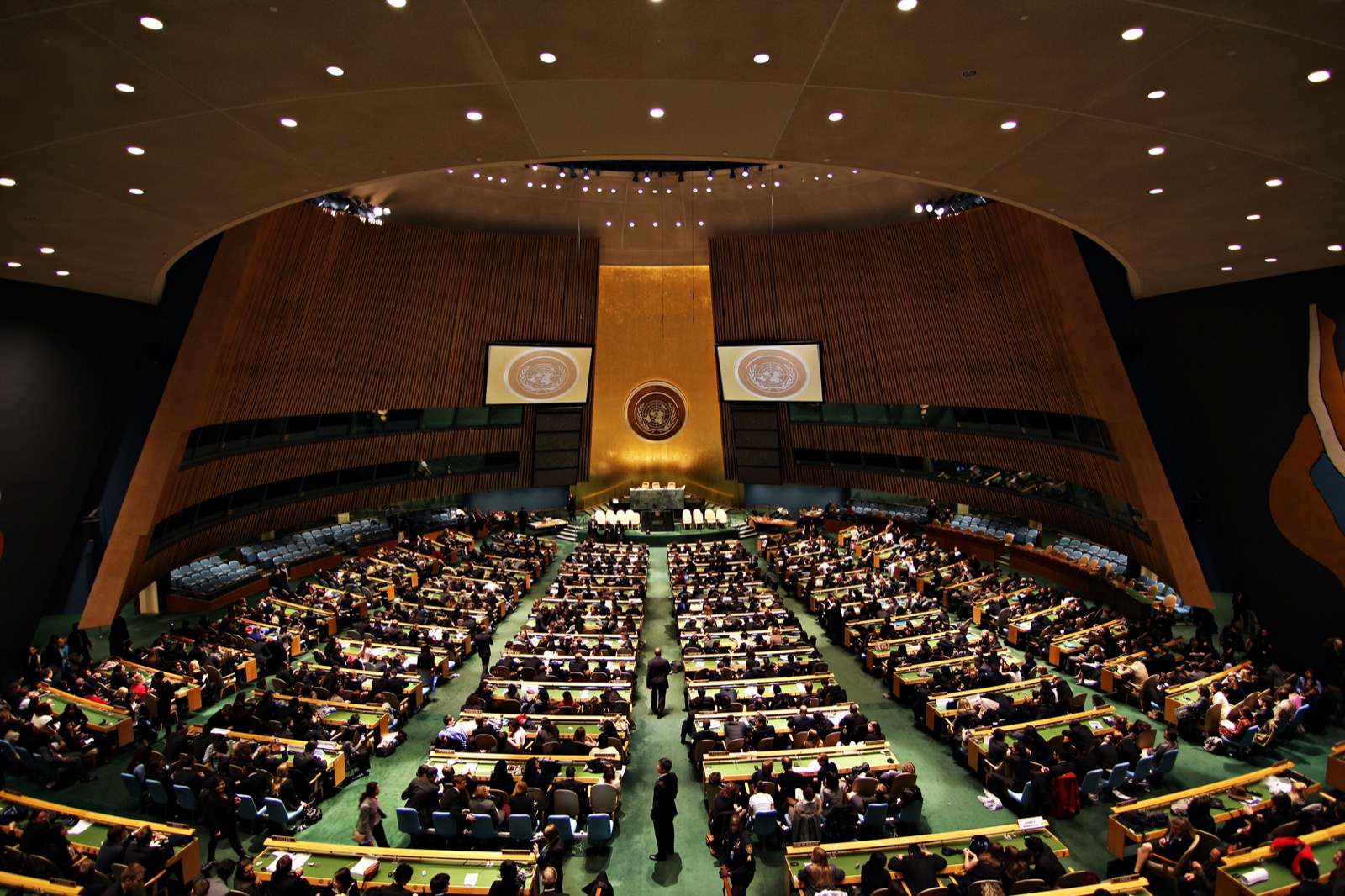
A State Department cable dated May 19, marked sensitive but unclassified and first reported by NPR, instructs U.S. diplomats in Jerusalem to lean on Palestinian officials this week and demand that Ambassador Riyad Mansour withdraw his bid for one of the 21 vice presidencies of the U.N. General Assembly. If the Palestinians refuse, the cable lists possible consequences including the revocation of the delegation’s U.S. visas. Mansour has represented the Palestinian observer mission at the U.N. since 2005.
The cable argues that Mansour “has a history of accusing Israel of genocide” and that his candidacy “fuels tension” and undermines the administration’s peace plan for Gaza. NPR and several public radio outlets that received the document have published portions of the text. The State Department has not publicly disputed its authenticity. Vice presidencies of the General Assembly are largely ceremonial seats handed out by regional rotation, not policy posts with veto power.
Using visa cancellation against an accredited U.N. delegation is not a normal diplomatic tool. Former U.S. officials told NPR that visa restrictions on sitting diplomats have been reserved for extreme cases such as Russian intelligence officers or governments tied to election interference, not for procedural votes inside the General Assembly. The United States agreed, in the 1947 U.N. Headquarters Agreement, to grant transit and residence to representatives of member and observer states. That treaty is the reason the U.N. sits in New York rather than Geneva or Vienna. Treating those visas as leverage in a single policy fight pulls at the seam of that arrangement.
There is also a domestic question that gets lost in the foreign policy frame. Diplomatic visas issued in the name of the United States are supposed to function as a credential, not as a reward for agreeing with the administration of the day. Once an executive branch starts using accreditation as a stick, the next administration inherits that precedent, and the one after that. The Palestinian mission is the case in front of us. The principle being set is broader.
For readers who want a hard U.S. line on terrorism and a tough posture at the U.N., none of that is in conflict with asking whether this specific move is the right tool. The administration has plenty of leverage over the Palestinian Authority through direct funding, bank designations, and bilateral diplomacy. Reaching past that into the seating chart of the General Assembly, by leaked cable, on a 72-hour deadline, is a different kind of step. It deserves a public debate in Congress, on the record, before it becomes the way the United States does business at the U.N.